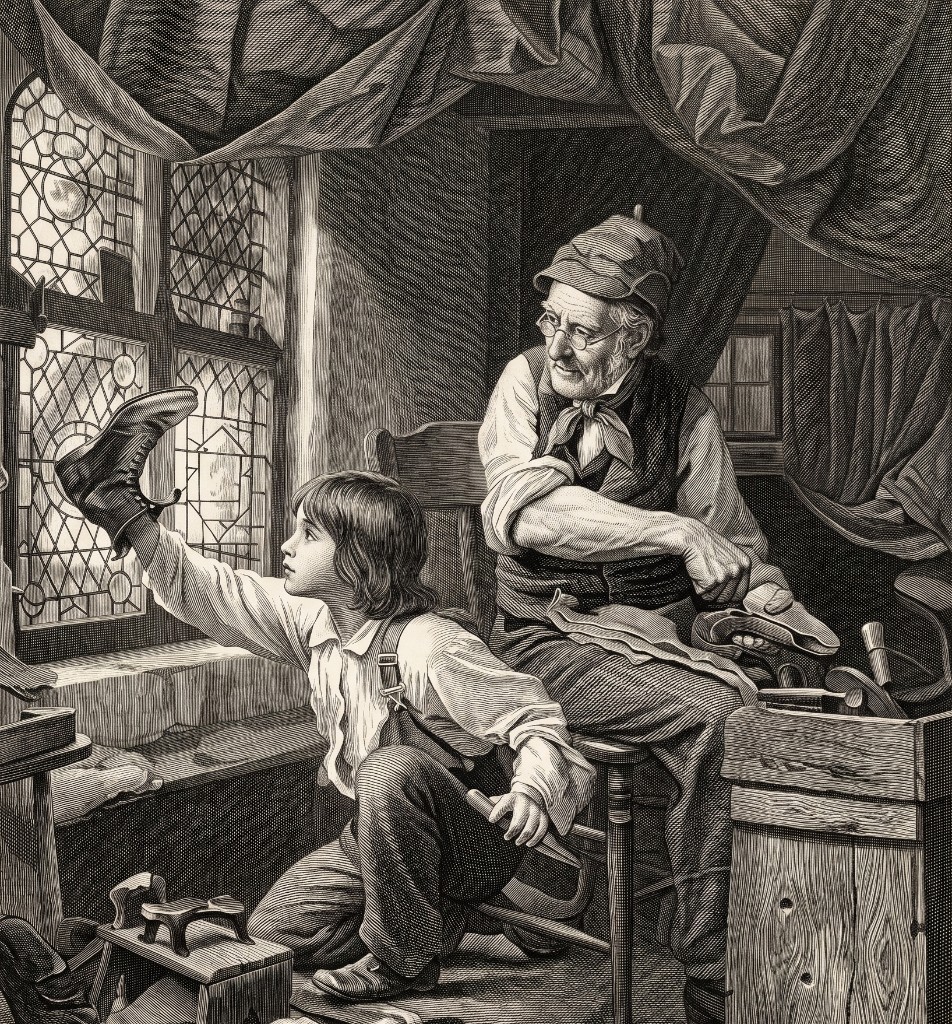
There’s no driver in the driver seat.
TL;DR: In my lifetime, there will probably come a point when there is nothing humans can do better than machines. Nothing. Being world-class at something and taking pride in one’s own work is an incredible feeling and a foundationally human source of meaning. The prospects of losing it are deeply saddening. On the other hand, we do have a lot of problems and solving them with automation and AI would be great. But I can’t help but wonder: what are we, far or not into the future, going to do every day when there are no tasks remaining for us to have to do? A generational search for meaning in life may be around the corner. One almost hopes there is “someone” out there who thinks carefully before automating, advancing, and deploying artificial intelligence. If this was a car driving somewhere, one would hope the driver at least has a map. Driver? Hello?
I started coding when I was 10. I was, and still am, good at it. I made games, implemented BFS and neural networks from scratch and had a ton of fun doing it. At the end of the day, I would look at what I wrote and feel a sense of pride. I would look at the code, the structure it had, the objects I had so meticulously named and ordered alphabetically. It would be something I show to my friends and expect them to react with the same sense of awe.
Two years ago, things changed; LLMs “promoted” me to a systems designer. It wasn’t really a promotion per say, I didn’t apply for it. More than anything else, it was a thing that “just happened”. Nowadays, there is hardly any piece of code left that I can write better and more efficiently than LLMs, so I barely code. I just write prompts and architect systems.
What I used to take pride in is now (almost) entirely automated.
“But isn’t that great — everyone can now create faster and be more productive?”
Yes, it’s great, and similar events have happened many times in history. Architects used to spend their entire careers learning how to draw perfectly straight lines and detailed sketches by hand. Then, design software came along and did the drawing for them. Accountants once had to be incredibly skilled at doing long math by hand to balance paper ledgers. Now, spreadsheets do those calculations in a split second. Similarly, instead of writing code, vibe coding and system design are the next things for us to be great at. As a society we have been upgrading our tools for millennia, and constantly learned to use the new, better versions of them.
But something feels different this time. The human brain is a finite computational system. There are a fixed number of neurons, and a fixed number of connections between them. So, by design of our own nature, we are limited in how quickly and how much we can learn in a lifetime. Until brain–computer interfaces become really really advanced (and we are far from that), that will remain so.
On the other hand, with the amount of energy readily available in our universe, it seems we are very far from the limit of how large we can grow AI and its capabilities. Compute, in contrast to our brain, is scalable.
While I’m happy for the interim to undertake the task of becoming a top 1% vibe coder, under my new role as a “system designer”, I wonder what will I be promoted to in the next major AI update, or the one after that? These “promotions” might just eventually lead to being promoted out of utility.
There are limits to what humans can and cannot learn to do efficiently, by design. What will we do every day when the AI systems we built surpass those limits in every domain? In other words, what will we do when no one has to work and every task can be done more efficiently and cheaply by a machine instead of by a human?
Here are some possible answers, among many: “Enjoy life”; “Travel”; “Drink margaritas by the beach”; “Art”;
This seems great to do for a while, but can you really do it every day for the rest of your life?
To me it seems, if we get there — to the time and place where the only inefficiency remaining is you and me — we would have lost something foundationally human. We would have lost in daily life the same thing we watch the Olympic games for. When we watch a figure skater, we aren’t just watching a jump. We are respecting the years of early mornings and the thousands of times they fell on the ice to master that move. That dedication evokes a special feeling in us. But if you can no longer be the best at anything because a machine is always better, the motivation to be that dedicated starts to fade. The magic is gone. Human excellence becomes more like a museum piece — something you admire because of how people used to do things in the past, rather than a living goal that drives you. If we get there, to me it seems we would have lost the beauty in the human craft.
But outside the Silicon Valley bubble, away from the AI-infused billboards, away from the weird ping-pong balls on top the Salesforce tower that never seem to stop, things are much less bleak. If you travel anywhere else in the world, you will see that artificial intelligence and automation have barely even scratched the surface, and those concerns seem far too distant. Today, 2.5 billion people do not have access to the internet. That many more suffer from hunger, disease, and lack of basic sanitation. Those are the problems of today, not tomorrow. They are important, and we must solve them any way we can.
Everything has its tradeoffs, and perhaps this whole discussion is about the distant, or not-so-distant, future. In any case, we will see the AI race run its course. If this whole thing was a car, driving somewhere, I guess I just hope the driver is following a map, making sure we get to a good place. But there’s no driver in the driver seat.
— Andrey